
Expecting Change but Not Like That
Introduction
For those who do not know me, my name is Charissa, and I am the landscape designer at Illman Young. Coming from Canada, I bring a unique aspect to the team with my knowledge and understanding compared to what is considered ‘normal’ or ‘expected’ from those from England.
Join my struggles and triumphs as we rediscover landscape architecture from two sides of the world.
Plants Change and People Adapt
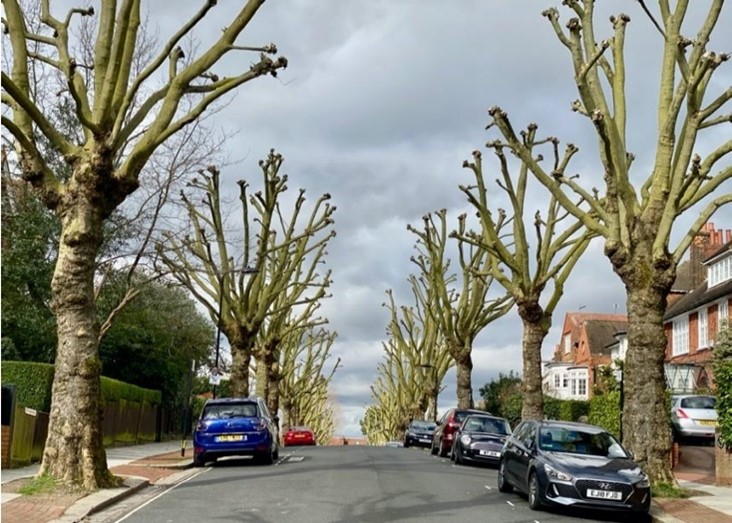
Has anyone questioned how wrong it looks to force a tree to look naked?
A harsh climate with distinct seasons has some upsides. Not only are pesky bugs unable to survive in the cold, but trees also begin to grow in very predictable ways. The seasons change one by one, and as all are taught; buds bloom in spring, leaves emerge in summer, falls drop in autumn, and trees become bare in winter. But could this be the only change present?
When arriving in this country, the first thing I could not unsee was the way the trees were trimmed. How could anyone look at a tree cut top to bottom and call it normal? It looks so alienated in the landscape!
What could be the reason someone would do this? Was it a long past-down tradition, or was it a different type of tree than what I thought? Was it the milder climate season?
After much debate while passing these funky-looking plants every day, a thought came to mind. It rains a lot in the UK. Seriously, it rains all the time and at any point in time!
In Canada, we can expect rain approximately 98 times a year, according to Weather Dashboard, 2024. While in England, rain is expected at least 117 times a year (Statista, 2024). The difference might not seem too great, but it adds up when you consider half of the year in Canada is covered in snow.
If a plant receives a mist of water every few days for an entire year, the characteristics and shape of the plant will change.
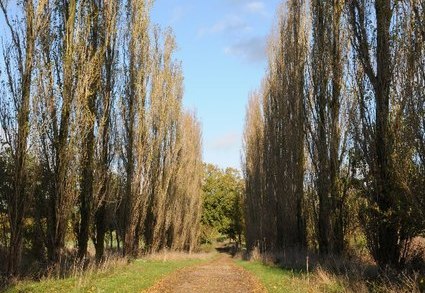
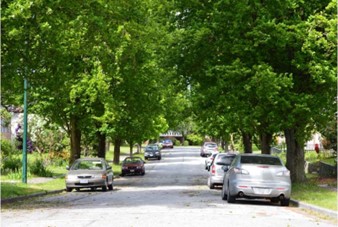
Trees across the world are expected to be slim on the bottom and full at the top.
In Canada, we can even identify trees from a distance based on their shape/form/habit of growth; an Elm grows like a vase, Sugar maples tend to take on a round shape, Silver maples like a rectangular shape, and so on (UofG LARC 2000, 2016). This trick does not work in England however, because suckers from the tree start to grow in every which direction throughout the entirety of the plant. To combat this and keep trees in a globally acceptable form, the people of England have adapted to trees trimmed to a severe state every winter and spring forcing growth to particular areas and keeping shape. This method also helps to keep the trees looking healthy and to develop strong limbs. (Evolution of Tree Surgery, 2024)
As a landscape architect from another country, I have come to the realization through this bizarre way of maintaining trees that plants I thought I knew could adapt to plants I do not.
Now I too must adapt and relearn my plants in the UK that have names I am familiar with, but growing habits I am not.
Image References
Image 01
Camden. ‘Redington/Frignal Conservation Area Character Appraisal & Management Plan December 2021’. chrome-extension://efaidnbmnnnibpcajpcglclefindmkaj/https://s3-eu-west-2.amazonaws.com/commonplace-customer-assets/redfrog/Appendix%201%20Draft%20RF%20Appraisal%20and%20Management%20Plan%20Dec%202021.pdf. Accessed 20 June 2024
Image 02
X, Science. “Trees Can Make or Break City Weather.” Phys.Org, Phys.org, 26 July 2017, phys.org/news/2017-07-trees-city-weather.html. Accessed 20 June 2024.


 Illman Young Landscape Design